
Tiny Tales
A Campaign Retrospective
Errant Thinking is hosting this month’s Blog Carnival, and the theme is Tiny Epics, which is especially relevant to me.
From summer 2020 through the end of 2024, I ran my longest, most complete, and most satisfying campaign to date. Tiny Tales focused on a group of tiny heroes in Minisculia, a hidden world within a single human neighborhood. We used Fellowship 2nd Edition by Vel Mini, which is structured to emulate an epic journey to defeat a looming threat to the world in the same vein as The Lord of the Rings. Why not use Mausritter instead? I was deep into Powered by the Apocolypse at the time. I had yet to become the Mausritter fanboy that I am today. But also, I have no regrets. Fellowship helped us play an exciting, emotional game, and we look back on it as an incredible story we made together.
Tiny Tales started with an image board and a vague idea to combine The Borrowers, Toy Story, A Bug’s Life, and The Lord of the Rings. Technically, the genesis of Tiny Tales was a childhood spent imagining miniature worlds in my backyard garden and watching my VHS tape of Honey, I Shrunk the Kids on repeat. But it didn’t really come together until Session 0 when the players created their characters and further defined the world that had only begun to take shape in my head.
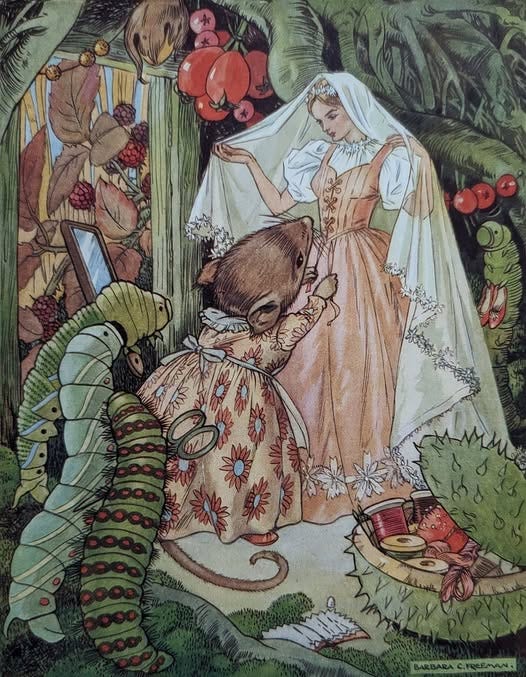
Tiny Folk
One aspect of Fellowship is its unique take on character creation. Although the basic playbooks are the standard characters you’d expect to find in Tolkien’s masterpiece, it doesn’t require that you play it that way. In fact, it encourages you to put your own spin on it.
When you play as the Elf, you decide what the Elves are, what their culture is like, what they value and care about, what their relationship is with the rest of the world. When someone asks about the Elves, all eyes will turn to you for the answer.
Giving players permission to re-flavor their playbooks and be the arbiters of their culture gave us the perfect framework for the tiny folks we wanted to portray.
Ella picked The Harbinger playbook, representing the wizard or mentor archetype. She made her an angsty, jaded Fuzzer (a Furby-like toy) who once worked for the evil overlord, Rosara, before being marked with a burning scar and cast out into the world alone. Poppy in Exile Eternal was the catalyst for the PCs’ adventure, bringing everyone together to confront a horrible doom that she had foreseen but couldn’t yet articulate.
Savanna chose The Halfling playbook and reskinned it as a Borrower. Bosco Barleycorn enjoyed food, pipe leaf, a warm fire, and a good place to sit inside her home behind the wainscotting, and was pulled reluctantly into the adventure by the wizard. Bosco was the heart of the fellowship and the only original member to remain until the end. She went from stubbornly clinging to her creature comforts to becoming a warrior in her own right.
The Heir, a stand-in for Aragorn, was Brian’s playbook. Prince Skitter Longwing was an honorable-if-naive Grasshopper and heir to the Insect Kingdom throne, whose capital, Oakvale, had recently been destroyed by Rosara. He was accompanied by an entourage that included Princess Fidget, his stowaway sister; his manservant, a cricket named Davenport; and his personal chef, a borrower named Olo Brockhouse.
Last, but not least, was Tremella Fuci, played by Chachi, using The Orc playbook. She was a Mushie, a living mushroom sprite, a shaman to her people, inhabiting the body of an action figure like an exoskeleton, often changing husks like a hermit crab. She considered herself an agent of entropy, secretly admiring the destruction Rosara had brought to the world.
A couple of players would later change characters, and a new player joined about halfway through. It was these four who departed from the burnt husk of Oakvale, declaring themselves a fellowship, and traveled the road toward the Overlord.
In Fellowship, The Overlord is the antagonist, the big bad, and the GM. They have their own principles, agendas, and playbook. The Overlord was collaboratively created during our Session 0, and I continued to flesh her out and expand her backstory as the game progressed and new details emerged. We called our Overlord Rosara the Puppet Master. She resembled a Pixie, but as the heroes learned more about her, they discovered that she was actually a corrupted toy, over a hundred years old. Similar to Sauron, she had risen to power and been defeated a generation ago. Now she was back and slowly gaining more power than ever before. She was a looming presence in the background of our story for almost twenty sessions before the PCs finally had their first encounter with her. Before that, they battled her minions and generals. And along the way, they saw the destruction she left in her wake.
Another important element in Fellowship is the bonds you make with communities. Everywhere the PCs went, a community was in need because of Rosara. Every community that the heroes helped granted them a boon in return. This is how they planned to overthrow the Overlord: by gaining the support of various factions until they were powerful enough to confront her. It also gave them something to fight for.
A few of the communities they visited include Bloomsbrom Thicket, a berry-laden bush and fishing village on the edge of a stream that was home to worm-wrangling, hamster-like rodents (inspired by Michtim); Pinedale, a village built on the boughs of a great evergreen, whose inhabitants have an untold number of uses for sap and pine needles; Dawnspire, the Pixie’s hidden summer court and an eternal BBQ and gossipy pool party; and Shovelberg, a shantytown built in the shade of a shovel head out in the muddy Wastelands where wacky races between toy cars and junk machines were held to determine the winners of valuable resources.
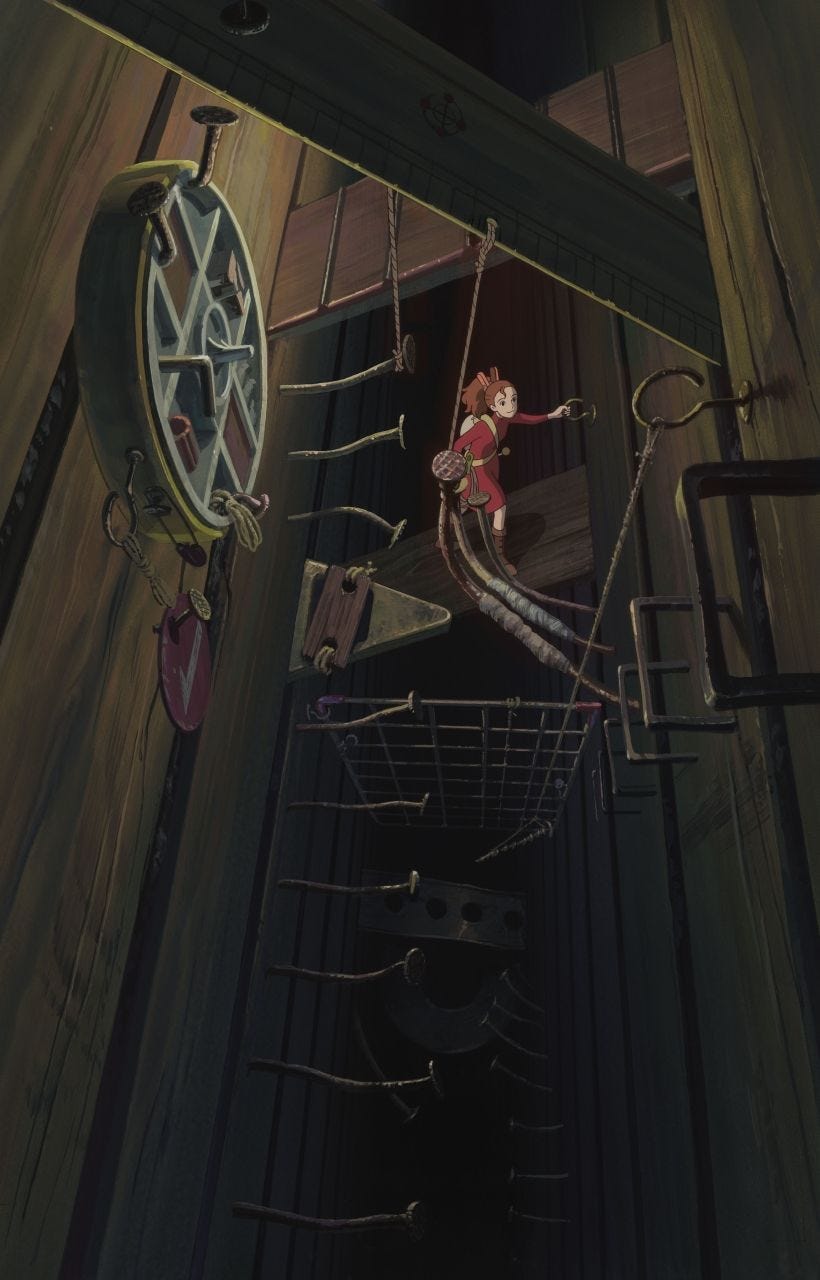
Travel Montage
My favorite mechanic from Fellowship, and one which I’ve continued to borrow and hack, is A Long Journey. Whenever the PCs are traveling from one location to the next, players take turns narrating an event that happened along the way. After a player describes the event, they choose another player at the table, who tells us how the event was resolved. The journey ends and the group arrives at their destination after every player has narrated one event and resolved one event.
Using A Long Journey for our game created some of the best moments, emphasizing the balance in tone we discussed in Session 0 between cozy moments in small communities and the harsh realities of traveling in a world that towers over you. Not only did we get to describe the fun moments of seeing mundane objects through tiny eyes and using small items in unique ways, but we also ended up introducing characters and concepts during those Long Journey moments that would become integral to the story later on. They weren’t just frivolous montages between the meat of the story. They were often the soul of the story, reminding the characters how big the world could be.
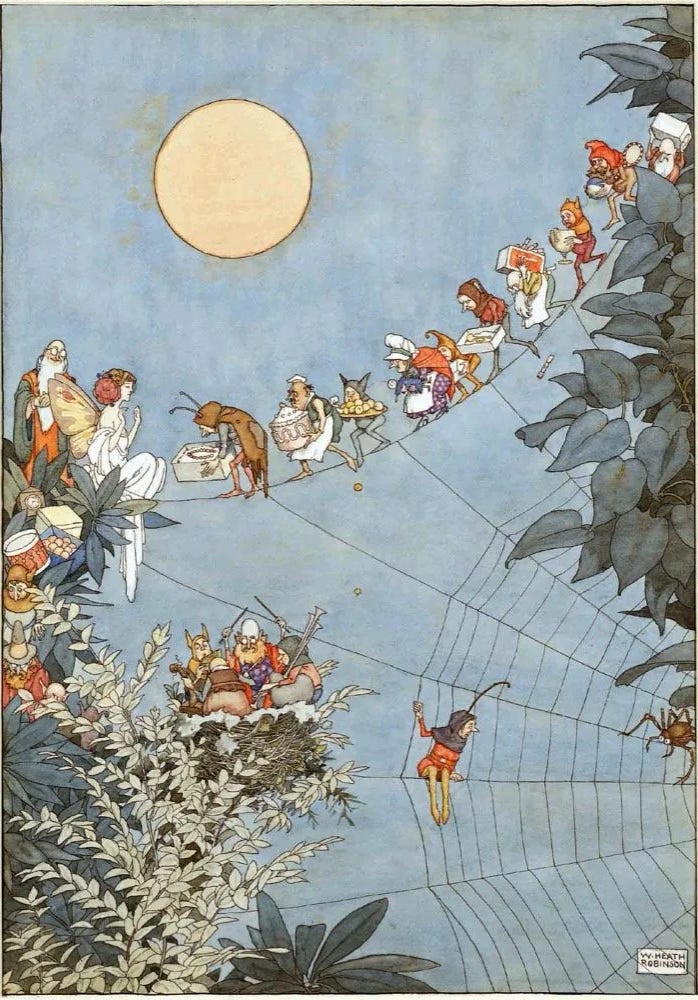
All The Small Things
We constantly played with scale, reimaging small objects as useful tools: pine needle arrows, cocktail swords, forks used as rakes, bubble wrap goggles, rubber ducky boats, coins as plates, paintbrush brooms, weaponized silly string, Xacto blades for ice skates, a hot air balloon made out of chip bags, a hazelnut chariot pulled by a bat, a Christmas ornament bathysphere, thumbtack crampons, and tea strainer snow shoes.
Some notable factions include The Lampriders, the firefly postal service of the Insect Kingdom, delivering messages across the night sky through a secret code of blinking lights; The Plastiks, dwarf-like clans of underground dwellers who molded their own kin out of reclaimed plastic; Gremlins, tiny goblinoids who live inside machinery, breaking and tinkering without purpose or care; and the Coven of Cats, thirteen fickle felines indifferently meddling in the affairs of tiny folk.
If we used pop culture from our real world, it usually had the serial numbers filed off and got renamed. For example, the RC car companion that Poppy brought with her, a stand-in for Shadowfax, was Rover, a Dinosaur Gardens utility vehicle, and definitely not a Jurassic Park Jeep. Instead of Sorry!, the board game, we called it Apologies!, and the little conical pieces were like pets for the living toys. Beanie Babies were Sand Dollies, Lego were Brick-Os, and the Teenage Mutant Ninja Turtles were the Butt Kicking Sewer Brothers. Rosara’s minions were always brightly colored toys, in contrast to her dark machinations, and one of them was a combination Sky Dancer and Beyblade spinning top that we called a Blade Dancer. We didn’t have to do this to avoid being sued; we just did it out of a sense of playfulness and because it added another layer of otherworldliness to the setting.
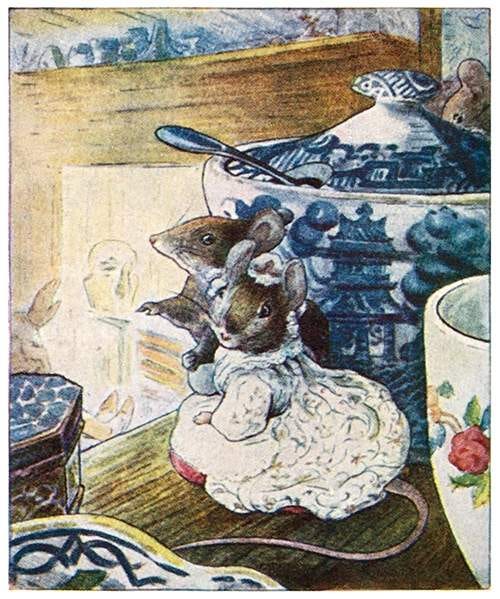
End Credits
We played Tiny Tales as if it were a beautifully animated television show, dividing the story into episodes, talking at the table about diegetic music, title cards, and voice actors. Over the course of four years, the campaign took about sixty sessions, separated into two seasons, Autumn and Winter, and totalled thirty-six episodes.
Would I do things differently now? Yes, of course. You don’t play that much of a single game and not learn a lot about your preferences, your table, GMing, and more. By the end, Fellowship was creaking at the joints as we pushed it far past what it was intended for. The players had leveled up to a point where it was difficult to create stakes. Some of the genre conventions that we were getting into didn’t perfectly align with the game’s goals. But, all in all, we made it work and reached a satisfying conclusion, mostly because we were all invested in seeing it through. Our tiny heroes had been through so much together. What I’ve written here barely scratches the surface of the adventures they went on.
I’d be remiss not to mention Zorton, played by James, using The Ogre playbook, who joined us in the second half of the game. A gentle giant of a stuffed monster, like a cross between Sully from Monsters Inc. and Ludo from Labyrinth. Or Bobby Chuck, Chachi’s second character, using The Outlander playbook, who was a human child who had been shrunk down to tiny folk size by his father’s experiment. Or how Prince Skitter sacrificed himself to save everyone from Rosara, then Brian went on to play as Princess Fidget for the rest of the campaign!
I’ve considered writing up episode recaps. Detailing the locations, characters, and items that populated Minisculia. There ended up being some deep lore surrounding all of it. It began humbly and ended epically, starting with attempting to cross a stream where the bridge had fallen and ending with Brick-O megazords, castle siege engines run by an army of insects, and an embiggening ray that would make Rosara a giant. I’ve also thought about turning some of it into supplements for Mausritter. I’m glad Errant Thinking chose this theme for the Blog Carnival, because it’s allowed me to delve through old notes and reflect on a cherished gaming experience.
For now, I’ll leave you with the song we played at the end of every episode, as we imagined the end credits. Always a quiet, illustrated moment like a manky old boot in the rain that had acted as shelter in a storm or the first snowfall of winter on a brick wall that signalled the human settlement ahead.
Enthralling read. Sounds like a great time!